Build a data-driven territory plan that aligns Active Sellers, target accounts, and revenue goals into a structured production model.
Learn to manage execution and performance
Gain the ability to turn strategy into predictable revenue
This module teaches:
Evolving from Administrator to Architect: Transition from managing partner relationships and program compliance to designing and owning a systematic revenue production engine.
Focusing on Active Sellers: Shift the primary "unit of production" from the partner organization to individual sales reps who are actively prospecting in target accounts.
Managing Execution via Data: Move beyond tracking passive activity to managing territory performance through measurable outcomes like conversion rates and deal progression
This module covers:
Shift from territory coverage to Revenue Architecture, aligning sales, partners, and marketing into one engine.
Focus on economic buyers, using partner relationships to accelerate engagement and time-to-value.
Manage the territory through Active Sellers, the true drivers of pipeline and revenue.
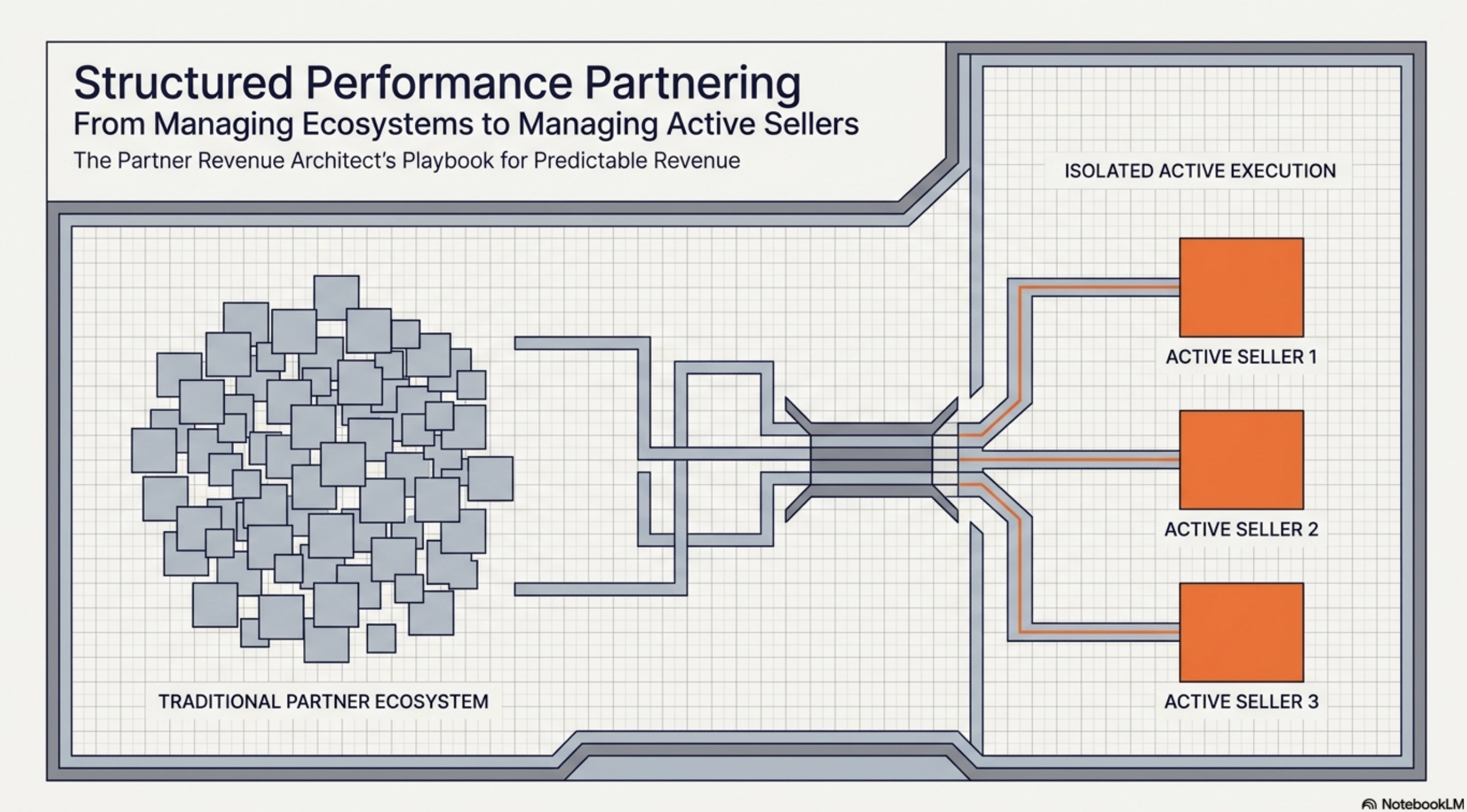
Learn to build and manage Active Sellers as the drivers of territory revenue.
Apply a structured territory planning and execution model aligned to measurable outcomes.
Use the 542 engagement framework to drive consistent performance and predictable results.
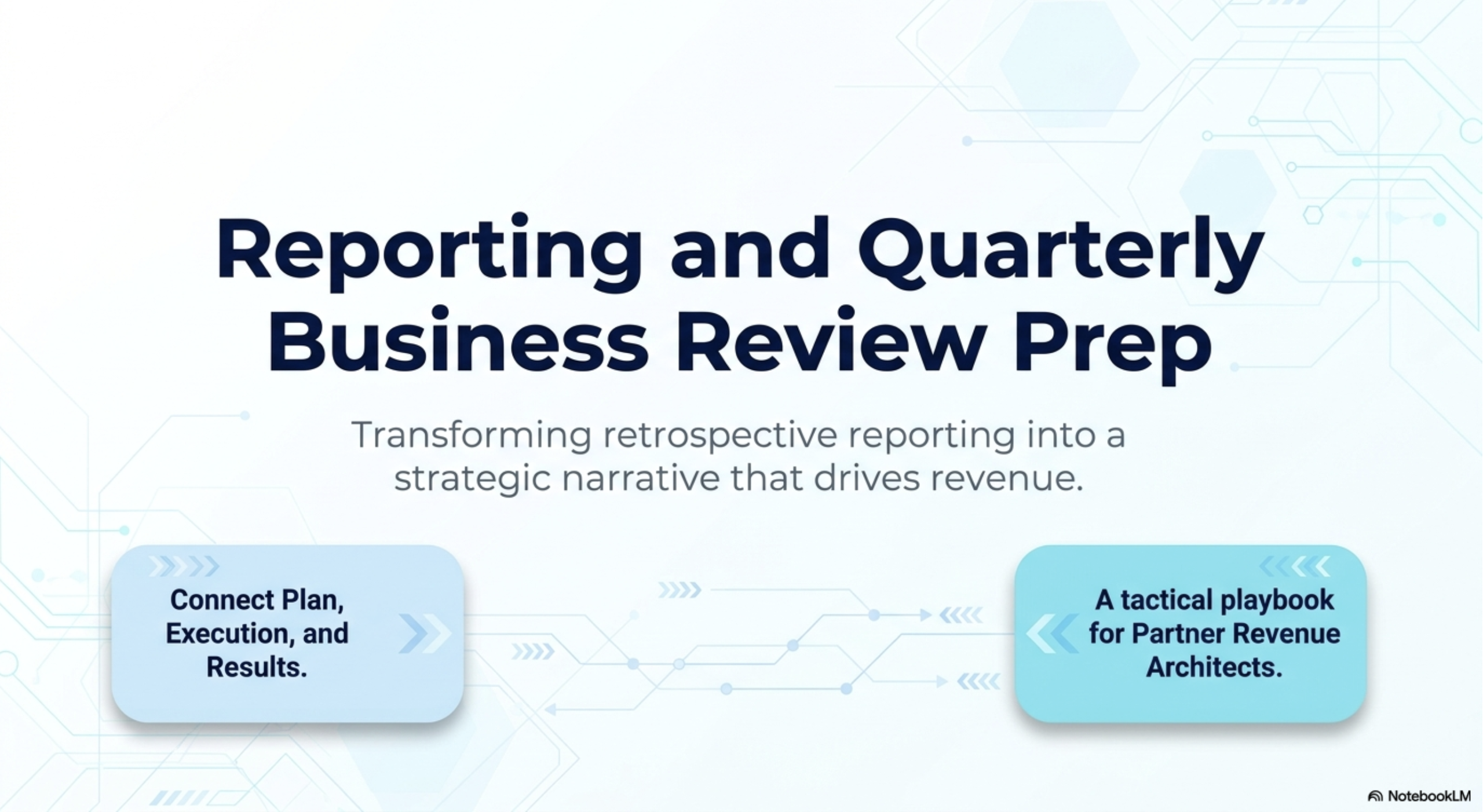
Learn how to measure partner performance using structured execution metrics, including active sellers, account engagement, conversion rates, and pipeline creation.
Understand how to translate data into insights by analyzing trends, identifying gaps, and using AI-driven recommendations to improve execution and revenue outcomes.
Develop the ability to deliver effective, data-driven QBRs that align to business objectives, provide actionable recommendations, and drive continuous performance improvement.
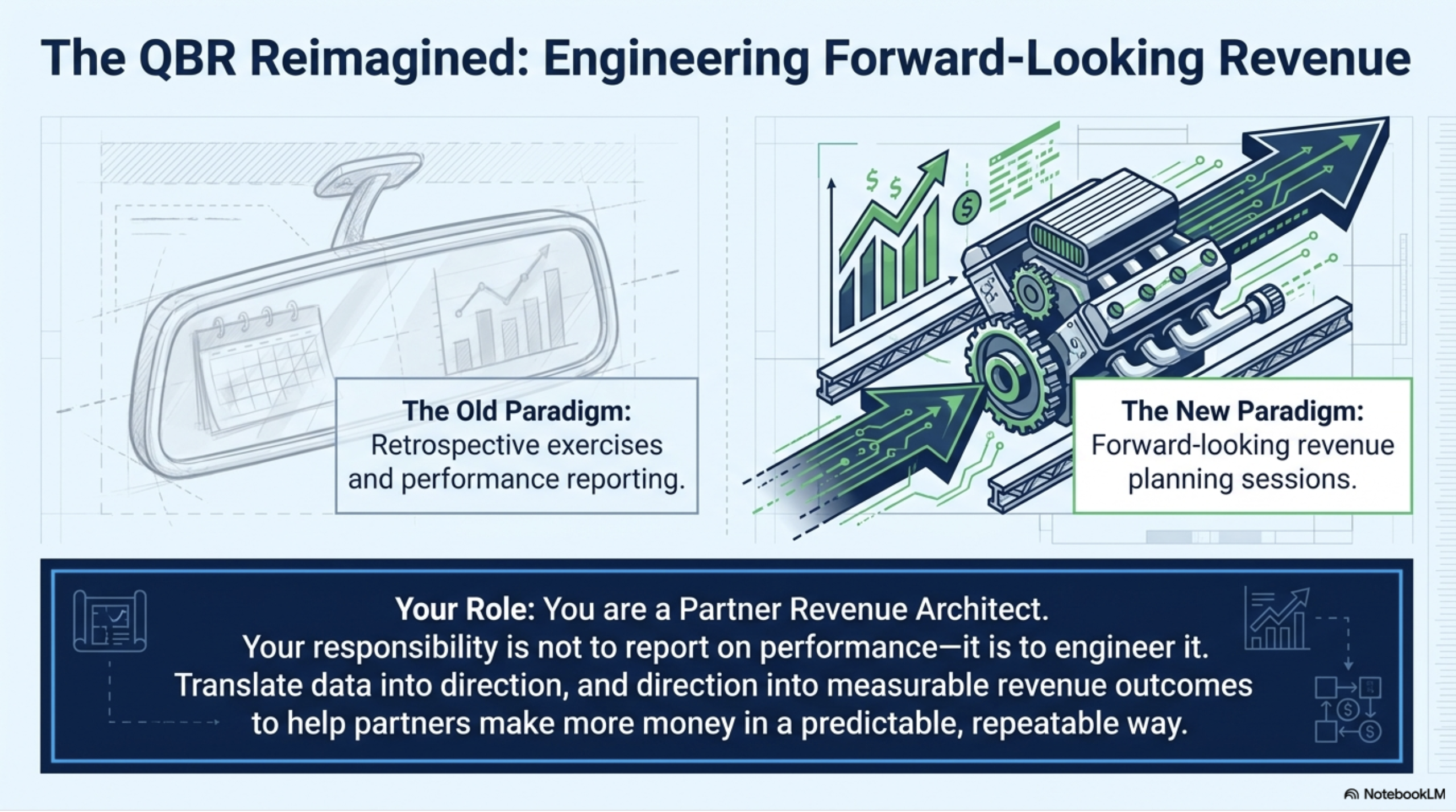
Learn how to turn QBRs into forward-looking revenue planning sessions, not historical reviews.
Apply the seven principles of effective QBRs to drive alignment, execution, and measurable outcomes.
Build QBRs that create clear plans, accountability, and predictable partner revenue growth.
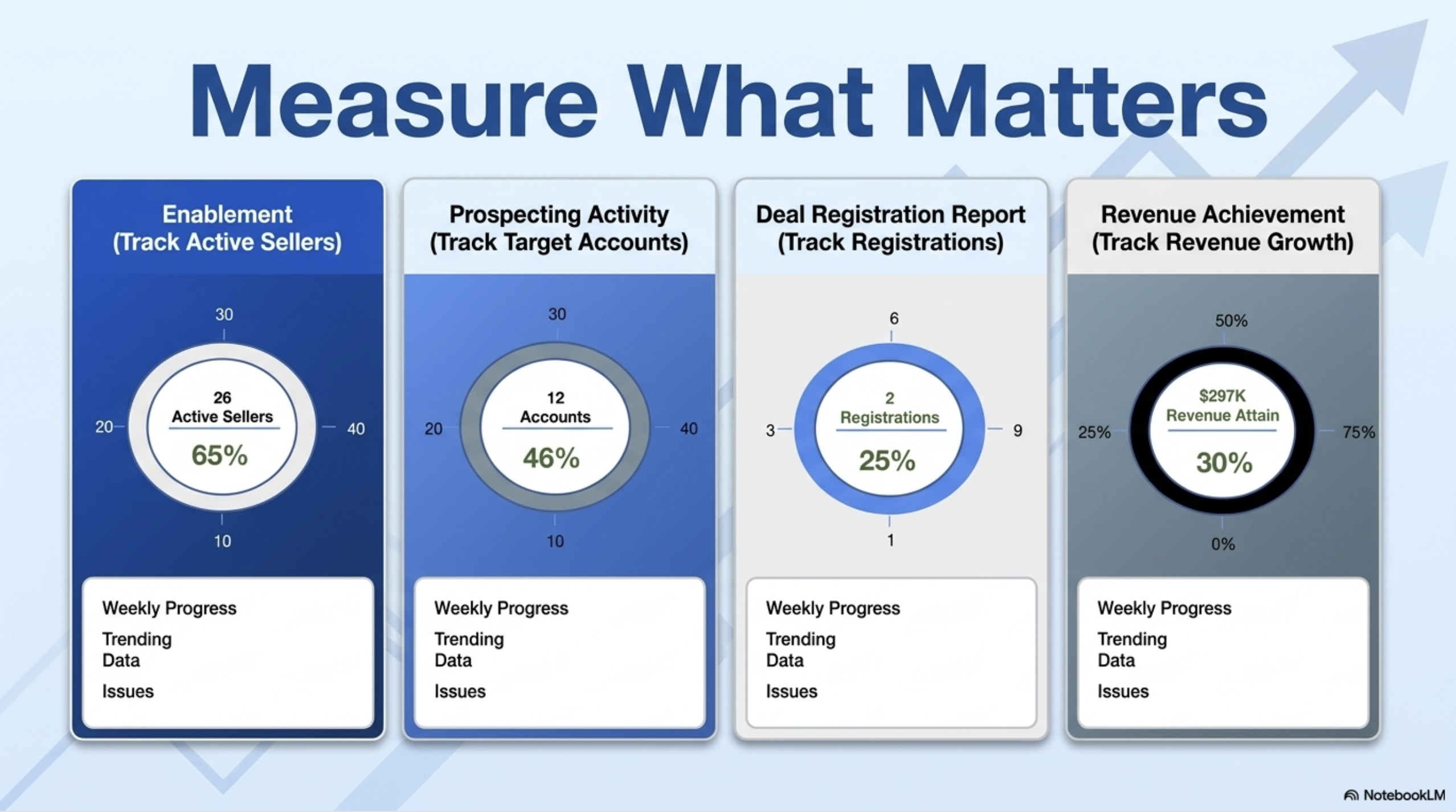
Run a structured weekly cadence that drives execution across sellers, accounts, pipeline, and revenue.
Interpret data to identify gaps and take action on leading and lagging indicators.
Lead effective meetings that balance accountability, coaching, and team engagement.
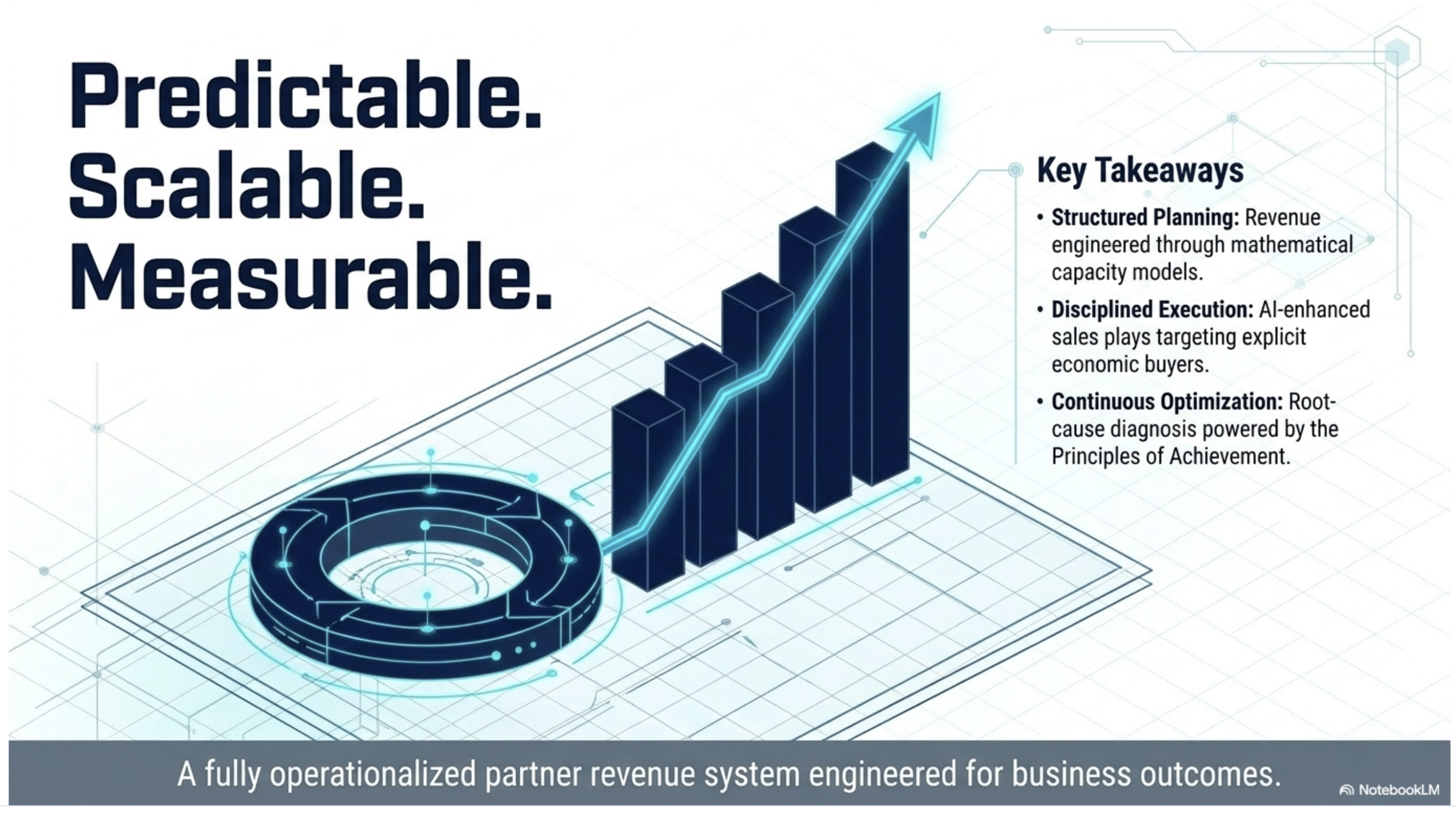
This module Summarizes the the Partner Revenue Architect role and the Certificate Program